Canada
° British Columbia (Vancouver and Vancouver Island)
° Edmonton ° Halifax
° Hudson Bay
° Manitoba
° Montreal
° Newfoundland and Labrador (St. John's)
° Ontario
° Ottowa
° Quebec
° Regina ° Toronto ° Winnipeg
° The Maritime Provinces: New Brunswick and Nova Scotia
British Columbia: Vancouver Island

As recently as 220 years ago the northwest coast of North America was one of the least explored areas in the world. The geography of the land presented many formidable natural barriers to European explorers. To the east the soaring Rocky Mountains blocked explorers, and the Pacific Ocean separated land masses off the west coast. During the second half of the 18th century, expeditions mounted by the Russians, American, Spanish and British explorers and traders reached the shores of Vancouver Island.


The peaceful existence of the aboriginal people (the Nootka, Coast Salish, and the Kwak'wala speaking people) changed soon after the first contact by Europeans in 1778, when Captain James Cook set foot on Nootka Island on the northwest coast of Vancouver Island. The Spanish later arrived and set up a base at Nootka under the command of Don Juan Francisco de la Bodega y Quadra, who had claimed the coast of Alaska for Spain. In 1792, Captain George Vancouver, with his ships Discovery and Chatham, arrived at Nootka Sound to take regain control under the terms of the Nootka Convention.


Southwestern British Columbia's history centers around the discovery of the mighty Fraser River. Early European explorers along the coast missed the mouth of the Fraser River due to dense fog. The Fraser was discovered in 1791 by Spaniard Jose Maria Narvaez, a pilot in the Spanish Navy. Michael Phillips was the first white man to blaze a trail across the Canadian Rockies from west to east through an unexplored pass, although routes were long known by the First Nations people. The Peace River, the only British Columbia River that drains into the Arctic Ocean, was navigated by explorer Alexander Mackenzie in 1793. Mackenzie was the first European to navigate the Peace River, which was named for a treaty between the Cree and Beaver First nations in 1790.
June 2, 1877, Winnipeg Free Press, Winnipeg, Manitoba, Canada
The Export of our Live Cattle.
From the Monetary Times.
The present and future importance of the movement recently begun in the shipment to Britain of live stock, fully warrants the interest displayed in it by the press both here and in the old country. The ready sale which has been found in England, for "American beef" shipped either live or dead, and the effect it has had in cheapening the price of butchers' meat to a class who need it and who use it largely, point to the permanency of the demand, and the consequent growth and development of this business. The reduction effected already in the price of meat to the English artisan by the shipments thus far made, must create increased request for it in the localities where hitherto its price made it a rarity, or at any rule made its consumption far smaller than it will be. Canadian and American meat sells now in Liverpool or Glasgow at sixpence to eightpence sterling per pound, dressed weight, and it costs a penny the pound to get it conveyed thither.
This reduction of from 20 to 30 percent in the price is a great boon to the English workman, and is at the same time a price which well pays the Canadian producer. With reference to the trade in dead meat, which by means of refrigerating cars on land and cold air chambers on board ship is being pushed to such proportions, something may be said, inasmuch us one Canadian firm have been shipping 200 head per week for some months past. The margin of profit , however, at present price of live beeves, is somewhat precarious.
The Haida Canoe


1878: The Haida Canoe was carved from a single piece of wood, the trunk of a large Western red cedar tree. The sixty-three-foot-long, seaworthy canoe was built in 1878 by the Haida, who are native to the Queen Charlotte Islands off British Columbia. Canoes were an essential part of life for the Indians of this area, and were used for traveling to ceremonies, for trade, and for war. This canoe may have been used as a dowry payment; it was linked to both the Heiltsuk and Haida people, with stories suggesting it was at firs tunadorned, with the killer whale, raven, and figurehead sculpture of a sea wolf added later. Although the trunk was only eight feet in diameter, the shipwrights softened it with boiling water and widened it to make the canoe eight-and one-half feet wide. The front of the canoe is decorated with a carving of a wolf and a painting of a killer whale. The carved decoration is more typical of the Bella Bella Indians than the Haida, and implies that the canoe was sold to a Bella Bella chief, who added his own embellishments.


Native people delivered the purchased canoe to Victoria, British Columbia, where it began a lengthy journey to New York.
First, it traveled by schooner to Port Townsend, Washington, then by steamer to Panama, via San Francisco. Since the Panama Canal had not yet been built, the canoe crossed the isthmus by rail, arriving in New York City by ship in 1883. A horse-drawn dray delivered it to the Museum, where it was put on display shortly after its arrival.
April 6, 1893, San Francisco Call, San Francisco, California, U.S.A.
HAIDA INDIANS FOR CHICAGO.
A British Columbia Tribe to Be Exhibited at the World's Fair.
Vancouver. B. C., April 5 -- Today fifteen Haida Indians, under the care of James Deans, left here for Chicago to take part in the World's Fair. A number of totem poles and other curios were also sent. The Indians are of both sexes, and will, during the exhibition, carry on some of the arts in which they are versed. They will receive $20 per month and board.
April 7, 1894, Winnipeg Free Press, Winnipeg, Manitoba, Canada
To Ask Lord Rosebery to Change the
British Behring Sea Law.
VICTORIA, B.C., April 6. A deputation of British Columbian sealers to-day waited on Premier Davie to consult as to the advisability of cabling Lord Kosebery to insist thai; only British vessels be empowered to seize British Columbian schooners, but he expressed the opinion that such action would be useless.
Winnipeg Free Press, December 18, 1900, Winnipeg, Manitoba, Canada
SS ALPHA FOUNDERS
Vancouver Vessel En Route to the Orient
Wrecked on Yellow Rock -- Nine on Board Drowned.
Vancouver, B. C., Dee. 17. 11 p. m. The steamer Alpha foundered on a rock on the east coast of Vancouver Island and is a total wreck. The captain, three engineers, the managing owner, the purser and three seamen were drowned.
Word was brought by the tug Czar, which has just arrived from Union Bay, Vancouver Island. It is the most serious shipping fatality which has occurred off the coast for several years. On Saturday night the steamship Alpha while proceeding to Union Bay for coal prior to sailing for the Orient ran on Yellow Island and became a total wreck. A gale of wind was blowing at the time, and heavy seas repeatedly
Swept Over Doomed Steamer
sweeping away her captain, purser, managing owner and six others of the crew.


The seaman managed to swim ashore with a line by which twenty-five of the crew got on to the rock, where they spent the night. Early next morning the lighthouse keeper was able to render assistance to the shipwrecked men, who had spent the night on the rocky islet, over which seas and spray repeatedly swept. On Sunday evening a small coasting sloop hove in sight and by means of the lighthouse keeper's boats the shipwrecked crew were put aboard and conveyed to Union Bay, a coal mining town about sixty miles north of Nanaimo. The drowned are: Capt. F. N. York, Vancouver; Sam Barber, managing owner; Purser Barbeur, Chief Engineer Matterson, Engineers Dunn and Murray; Seamen Cosey and Sullivan, also an unknown stowaway.
Up to this morning the bodies the purser, the manager and one seaman had been recovered. The Alpha was owned in Vancouver and had a cargo of 700 tons of salted salmon, lumber and coal. The cargo was chiefly owned by Jim and Tamuu, Japanese merchants of this city.
1899. World's Fleet. Boston Daily Globe
Lloyds Register of Shipping gives the entire fleet of the world as 28,180 steamers and sailing vessels, with a total tonnage of 27,673,628, of which 39 perent are British.
| Great Britain | 10,990 vessels, total tonnage of 10,792,714 |
| United States | 3,010 vessels, total tonnage of 2,405,887 |
| Norway | 2,528 vessels, tonnage of 1,604,230 |
| Germany | 1,676 vessels, with a tonnage of 2,453,334, in which are included her particularly large ships. |
| Sweden | 1,408 vessels with a tonnage of 643, 527 |
| Italy | 1,150 vessels |
| France | 1,182 vessels |
For Historical Comparison
Top 10 Maritime Nations Ranked by Value (2017)
| Country | # of Vessels | Gross Tonnage (m) |
Total Value (USDbn) |
|
|---|---|---|---|---|
| 1 | Greece | 4,453 | 206.47 | $88.0 |
| 2 | Japan | 4,317 | 150.26 | $79.8 |
| 3 | China | 4,938 | 159.71 | $71.7 |
| 4 | USA | 2,399 | 55.92 | $46.5 |
| 5 | Singapore | 2,662 | 64.03 | $41.7 |
| 6 | Norway | 1,668 | 39.68 | $41.1 |
| 7 | Germany | 2,923 | 81.17 | $30.3 |
| 8 | UK | 883 | 28.78 | $24.3 |
| 9 | Denmark | 1,040 | 36.17 | $23.4 |
| 10 | South Korea | 1,484 | 49.88 | $20.1 |
| Total | 26,767 | 87.21 | $466.9 | |

Site Search
A Journal, Kept at Nootka Sound
John R. Jewitt.
Jewitt was one of the surviving crew of the ship Boston, of Boston.Salter, commander, was massacred on 22d of March 1803. The book is interspersed with some account of the natives, their manners and customs.

The West Coast People: The Nootka of Vancouver Island and Cape Flattery
(Special publication / British Columbia Provincial Museum)


Merchant Kings: When Companies Ruled the World, 1600--1900
Stephen R. Brown


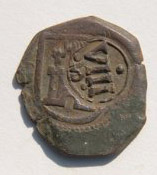

Spanish Pirate Coins


Chinese Junks on the Pacific: Views from a Different Deck
(New Perspectives on Maritime History and Nautical Archaeology.)
Hans Konrad Van Tilburg.


Archaeology of East Asian Shipbuilding
Jun Kimura
“The most comprehensive technical inventory of East Asian shipbuilding and shipwrecks available to date, this detailed analysis refines our understanding of East Asia ship construction.” — Hans Konrad Van Tilburg, author of Chinese Junks on the Pacific: Views from a Different Deck
American Merchant Ships
1850-1900
Frederick C. Matthews


 Copyright ~ 1998-2018.