Ship's Store United States Seaports
° 49ers 'Round The Horn ° Australia ° Captains ° Children ° Chinese in San Francisco ° Culture of Early America ° Merchants ° Passages ° Passengers ° Seaports ° San Francisco History ° Ships and Shipping ° California Fiction ° Fiction: Tales of the Sea ° Naval History ° Sea Politics ° Spanish in California ° Women at Sea
Books are also throughout the site under various topics.

Baltimore Then and Now
Alexander D. Mitchell |
||
Click to view stories from World Seaports |
||
 |
Walking San Francisco on the Barbary Coast Trail
 
Daniel Bacon |
|
  |
Atlantic Port Cities: Economy, Culture, and Society in the Atlantic World, 1650-1850
Franklin W. Knight (Author), |
|
 |
Louisiana: New Orleans
|
|
  |
Building the Devil's Empire: French Colonial New Orleans
French Quarter Manual: An Architectural Guide
Malcolm Heard Historic Buildings of the French Quarter
Lloyd Vogt |
|
Industrial Baltimore (MD) (Images of America)
 
Over the course of several centuries, Baltimore evolved from a Colonial-era port city to a thriving and dynamic city of nearly a million people at the conclusion of World War II. As the city grew, a wide variety of industries were established. Railroads, ports, manufacturing sites, and public infrastructure, such as power plants, fundamentally transformed large swaths of Baltimore's landscape. However, the second half of the 20th century saw a dramatic and often traumatic restructuring of the city's economy; individual businesses and entire industrial sectors downsized, relocated, or completely collapsed. Today many such areas of Baltimore have changed radically as abandoned manufacturing sites have been demolished or converted to new uses. Industrial Baltimore documents a vital component of the city's working past through historic photographs of the people and sites that made the city an essential economic engine of the Industrial Revolution. Over the course of several centuries, Baltimore evolved from a Colonial-era port city to a thriving and dynamic city of nearly a million people at the conclusion of World War II. |
||
Death of an Empire:
|
||
 |
New York and New JerseyPilot Lore; From Sail to Steam, and Historical Sketches of the Various Interests Identified With the Development of the World's Greatest Port. |
|


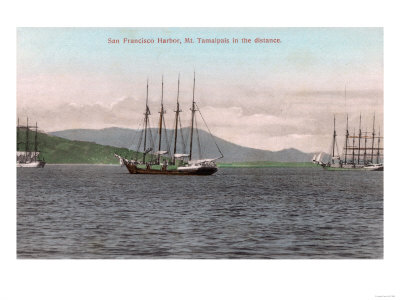 |
| Harborview of Bay and Marin County's Mt. Tamalpais in the distance. |

 Copyright © 1998-2017.