  Adam Smith wrote that man has an intrinsic "propensity to truck, barter, and exchange one thing for another." But how did trade evolve to the point where we don't think twice about biting into an apple from the other side of the world? |
A Splendid Exchange:
How Trade Shaped the World
William J. Bernstein
A sweeping narrative history of world trade from Sumer in 3000 BC to the firestorm over globalization today that brilliantly explores trade's colorful and contentious past and provides fresh insights into social, political, cultural, and economic history, as well as a timely assessment of trade's future.
An extraordinary story of global commerce from its prehistoric origins to the controversies surrounding it today, from ancient sailing ships that brought the silk trade from China to Rome in the second century to the rise and fall of the Portuguese monopoly in spices in the sixteenth; from the rush for sugar that brought the British to Jamaica in 1655 to the American trade battles of the early twentieth century; from key innovations such as steam, steel, and refrigeration to the modern era of televisions from Taiwan, lettuce from Mexico, and T-shirts from China.
Bernstein examines how our age-old dependency on trade has contributed to our planet's agricultural bounty, stimulated intellectual progress, and made us both prosperous and vulnerable. Although the impulse to trade often takes a backseat to xenophobia and war, Bernstein concludes that trade is ultimately a force for good among nations, and he argues that societies are far more successful and stable when they are involved in vigorous trade with their neighbors. A Splendid Exchange views trade and globalization not in political terms, but rather as an evolutionary process as old as war and religion a historical constant that will continue to foster the growth of intellectual capital, shrink the world, and propel the trajectory of the human species. |
|
A Chronicle Of American Ships And Sailors
Ralph Delahaye Paine
As an account of American sea-men and ships it is a stimulating and moving story of how the ordinary men fought against the odds. It also reveals that how these valiant and bold men went about finding modes to survive in the turbulent times that followed the American Revolution. |
 |
Islamic Civilization and Muslim Networks
Roxani Eleni Margariti
Historical analysis of the Yemeni Aden, positioned at the crossroads of the maritime routes linking the Indian Ocean and the Mediterranean Sea. It grew to be one of the medieval world's greatest commercial hubs.
University of North Carolina Press, 2007 |
 |
William Schaw Lindsay
There are four volumes in Lindsay's histories merchant shipping histories. Volume I starts with the antiquities of the mercantile marine and closes with the sixteenth century; Volume II traces the progress to the close of the French War in 1815; Volume III deals with Navigation laws of Cromwell and of the causes which led to their abolition; Volume IV is devoted entirely to teh rise adn progress of steamships and the different branches of commerce in which they were engaged.
Illulstrations, maps, plans, tables.
Adamant Media Corporation, 2001 (First Edition 1874-76)
|
|
  William R. Leach William R. Leach
This monumental work of cultural history was nominated for a National Book Award. It chronicles America's transformation, beginning in 1880, into a nation of consumers, devoted to a cult of comfort, bodily well-being, and endless acquisition. 24 pages of photos. From the Trade Paperback edition. |
|   Freaks of Fortune: The Emerging World of Capitalism and Risk in America Freaks of Fortune: The Emerging World of Capitalism and Risk in America
Jonathan Levy
Until the early nineteenth century, "risk" was a specialized term: it was the commodity exchanged in a marine insurance contract. Freaks of Fortune tells the story of how the modern concept of risk emerged in the United States. Born on the high seas, risk migrated inland and became essential to the financial management of an inherently uncertain capitalist future.
Focusing on the hopes and anxieties of ordinary people, Jonathan Levy shows how risk developed through the extraordinary growth of new financial institutions-insurance corporations, savings banks, mortgage-backed securities markets, commodities futures markets, and securities markets-while posing inescapable moral questions. For at the heart of risk's rise was a new vision of freedom. To be a free individual, whether an emancipated slave, a plains farmer, or a Wall Street financier, was to take, assume, and manage one's own personal risk. Yet this often meant offloading that same risk onto a series of new financial institutions, which together have only recently acquired the name "financial services industry." Levy traces the fate of a new vision of personal freedom, as it unfolded in the new economic reality created by the American financial system. |
|
Joel Richard Paul
  Silas Deane a Connecticut merchant and member of the Continental Congress went to France to persuade the king to support the colonists in their struggle with Britain. Pierre-Augustin Caron de Beaumarchais was a playwright who had access to the arms and ammunition that Deane needed. And the Chevalier d'...on was a diplomat and sometime spy for the French king who ignited a crisis that persuaded the French to arm the Americans. Silas Deane a Connecticut merchant and member of the Continental Congress went to France to persuade the king to support the colonists in their struggle with Britain. Pierre-Augustin Caron de Beaumarchais was a playwright who had access to the arms and ammunition that Deane needed. And the Chevalier d'...on was a diplomat and sometime spy for the French king who ignited a crisis that persuaded the French to arm the Americans.
This is the true story of how three remarkable people lied cheated stole and cross-dressed across Europe to gain France's aid as the War of American Independence hung in the balance. |
 |
Merchant Adventurer: The Story of W.R. Grace
Marquis James
This biography of William R. Grace (1832-1904) tells the story of a poor Irish immigrant who created an international empire. In a tale rich with details of Grace's maritime and political ventures as well as his personal life, James, chronicles an extraordinarily varied career. Grace opened up commerce with South America, where he made his first fortune trading guano, then dealt in everything from lumber and sewing machines to torpedoes for the 1879 war between Peru and Chile.
Reed Business Information, Inc. , 1993
|
 |
William L. H. Scarratt
Throughout its history, the British merchant marine often employed people from the same families; it was not uncommon to have brothers or cousins working together on the same ship. Until now, however, relatively little has been written to provide an accurate account of the working lives of families and ships engaged in the ocean-going trade of the late 19th and early 20th centuries.
This carefully researched book traces the careers of two merchant mariners and a typical "tramp" sailing vessel of the time. Drawing upon government records, employment contracts, crew discharge papers, and other primary sources, the author presents a methodical yet altogether personal history.
Maps, period photographs, and memorabilia. |
 |
The Role of America's Seas and Waterways
(Studies in Maritime History)
K. Jack Bauer
Bauer shows how early American history was fueled by a marine-based economy; the American Revolution was precipitated by laws regulating seaborne trade; our position in the community of nations was shaped by ocean-going trade; water trade helped forge the nation. Bauer discusses the rise and fall of the American merchant marine.
Reed Business Information, Inc., 1987
|
|
Ralph Delahaye Paine
The story of American ships and sailors is an epic of blue water which seems singularly remote, almost unreal, to the later generations. A people with a native genius for seafaring won and held a brilliant supremacy through two centuries and then forsook this heritage of theirs. The period of achievement was no more extraordinary than was its swift declension. A maritime race whose topsails flecked every ocean, whose captains courageous from father to son had fought with pike and cannonade to defend the freedom of the seas, turned inland to seek a different destiny and took no more thought for the tall ships and rich cargoes which had earned so much renown for its flag. |

Told by a Jew, about Jews, it reveals in surprisingly candid ways the ostracism of Jews in this country addressing how this all began. |
(Kodansha Globe)
Leon A. Harris
A history of America's famous Jewish shopkeeping families shows how the Filenes, Gimbels, Marcuses, and others created renowned retail empires out of small pushcart beginnings, powerfully evoking the social changes that were transforming America early in the century.
This book is full of history told in an easy-to-read style. Leon Harris reveals the struggles and successes of 12 of the earliest Jewish retailers of America including Levi Strauss, Sears, Roebuck, Neiman, Marcus etc. It is an historic account of the people whose names have become so familiar as store-names that we have forgotten there were ever people with those names. "Merchant Princes" includes many personal anecdotes about the founders of the stores and their families, retailing practices of yester-year and what these merchants did with their incredible wealth.
|
 
Stephen Bown studied history at the University of Alberta. He is the author of the internationally acclaimed Scurvy: How a Surgeon, a Mariner and a Gentleman Solved the Greatest Medical Mystery of the Age of Sail. His most recent book is Madness, Betrayal and the Lash. He lives in the Canadian Rockies. |
Steven Brown
Commerce meets conquest in this story of the six merchant-adventurers who built the modern world, as told by Steven Bown, "Canada's Simon Winchester" (Globe and Mail). Through the Age of Heroic Commerce, from the 17th to the 19th centuries, a rogue's gallery of larger-than-life merchant kings ruled vast tracts of the globe and expanded their far-flung monopolies to generate revenue for their shareholders, feather their own nests and satisfy their vanity and curiosity.
Their exploits changed the world during an age of unfettered globalization, mirroring a world we know today. Merchant Kings looks at each ruling monopoly through its greatest merchant king and considers their stories together for the first time. |
 
|
The Rise of Merchant Empires:
Long Distance Trade in the Early Modern World 1350-1750 (Studies in Comparative Early Modern History)
Tracy
European dominance of the shipping lanes in the early modern period was a prelude to the great age of European imperial power in the nineteenth and early twentieth centuries. The essays in this volume examine, on a global basis, the many different trading empires from the end of the Middle Ages to the eighteenth century. |
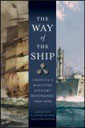 |
Alex Roland, W. Jeffrey Bolster, Alexander Keyssar
The history of shipping in America from 1600 to 2000, as traditionally recounted,is based primarily on the fortunes of the American merchant marine. The Way of the Ship is different. While it elucidates the significant impact of the merchant marine, this book views American maritime commerce from a global perspective and incorporates the crucial contributions of shipping on coastal and inland waters.
Wiley Publishing, 2007 |
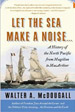 |
Let the Sea Make a Noise:
A History of the North Pacific from Magellan to MacArthur Walter A. McDougall
Author of "Freedom Just Around the Corner" and the Pultizer Prize winning "the Heavens and the Earth"
"Four centuries of exciting voyages of discovery, pioneering feats, engineering marvels, political plots, business chicanery, racial clashes and brutal wars."
City of Fortune: How Venice Ruled the Seas
Roger Crowley |
 |
The Path Between the Seas:
The Creation of the Panama Canal, 1870-1914 David McCullough
(Winner of the National Book Award)
From the book cover: "Mr. McCullough is a storyteller with the capacity to steer readers through political, financial, and engineerign intricacies without fatique or muddle. This is a grant-scale work.— Newsweek 
Simon & Schuster, 1977
|
 A Comparative Study of the American, British, Dutch And Russian Naval Expeditions To Compel The Tokugawa Shogunate to Conclude Treaties And Open Ports Hardcover)
William McOmie ($120)
When the United States entered the Gilded Age after the Civil War, argues cultural historian Christopher Benfey, the nation lost its philosophical moorings and looked eastward to "Old Japan," with its seemingly untouched indigenous culture, for balance and perspective. Japan, meanwhile, was trying to reinvent itself as a more cosmopolitan, modern state, ultimately transforming itself, in the course of twenty-five years, from a feudal backwater to an international power.  This great wave of historical and cultural reciprocity between the two young nations, which intensified during the late 1800s, brought with it some larger-than-life personalities, as the lure of unknown foreign cultures prompted pilgrimages back and forth across the Pacific. In The Great Wave , Benfey tells the story of the tightly knit group of nineteenth-century travelers connoisseurs, collectors, and scientists who dedicated themselves to exploring and preserving Old Japan. As Benfey writes, "A sense of urgency impelled them, for they were convinced Darwinians that they were that their quarry was on the verge of extinction." These travelers include Herman Melville, whose Pequod is "shadowed by hostile and mysterious Japan"; the historian Henry Adams and the artist John La Farge, who go to Japan on an art-collecting trip and find exotic adventures; Lafcadio Hearn, who marries a samurai's daughter and becomes Japan's preeminent spokesman in the West; Mabel Loomis Todd, the first woman to climb Mt. Fuji; Edward Sylvester Morse, who becomes the world's leading expert on both Japanese marine life and Japanese architecture; the astronomer Percival Lowell, who spends ten years in the East and writes seminal works on Japanese culture before turning his restless attention to life on Mars; and President (and judo enthusiast) Theodore Roosevelt. As well, we learn of famous Easterners come West, including Kakuzo Okakura, whose The Book of Tea became a cult favorite, and Shuzo Kuki, a leading philosopher of his time, who studied with Heidegger and tutored Sartre. Finally, as Benfey writes, his meditation on cultural identity "seeks to capture a shared mood in both the Gilded Age and the Meiji Era, amid superficial promise and prosperity, of an overmastering sense of precariousness and impending peril." This great wave of historical and cultural reciprocity between the two young nations, which intensified during the late 1800s, brought with it some larger-than-life personalities, as the lure of unknown foreign cultures prompted pilgrimages back and forth across the Pacific. In The Great Wave , Benfey tells the story of the tightly knit group of nineteenth-century travelers connoisseurs, collectors, and scientists who dedicated themselves to exploring and preserving Old Japan. As Benfey writes, "A sense of urgency impelled them, for they were convinced Darwinians that they were that their quarry was on the verge of extinction." These travelers include Herman Melville, whose Pequod is "shadowed by hostile and mysterious Japan"; the historian Henry Adams and the artist John La Farge, who go to Japan on an art-collecting trip and find exotic adventures; Lafcadio Hearn, who marries a samurai's daughter and becomes Japan's preeminent spokesman in the West; Mabel Loomis Todd, the first woman to climb Mt. Fuji; Edward Sylvester Morse, who becomes the world's leading expert on both Japanese marine life and Japanese architecture; the astronomer Percival Lowell, who spends ten years in the East and writes seminal works on Japanese culture before turning his restless attention to life on Mars; and President (and judo enthusiast) Theodore Roosevelt. As well, we learn of famous Easterners come West, including Kakuzo Okakura, whose The Book of Tea became a cult favorite, and Shuzo Kuki, a leading philosopher of his time, who studied with Heidegger and tutored Sartre. Finally, as Benfey writes, his meditation on cultural identity "seeks to capture a shared mood in both the Gilded Age and the Meiji Era, amid superficial promise and prosperity, of an overmastering sense of precariousness and impending peril."
The Last Samurai - Japanische Geschichtsdarstellung im populren Kinofilm (German Edition) |
|
Derek Lundy 
When, as a young man in the 1880s, Benjamin Lundy signed up for duty aboard a square-rigged commercial sailing vessel, he began a journey more exciting, and more terrifying, than he could have ever imagined: a treacherous, white-knuckle passage around that notorious "graveyard of ships," Cape Horn.
A century later, Derek Lundy, author of the bestselling Godforsaken Sea and an accomplished amateur seaman himself, set out to recount his forebear's journey. The Way of a Ship is a mesmerizing account of life on board a square-rigger, a remarkable reconstruction of a harrowing voyage through the most dangerous waters. Derek Lundy's masterful account evokes the excitement, romance, and brutality of a bygone era -- "a fantastic ride through one of the greatest moments in the history of adventure" (Seattle Times). |
 |
Charles W. Domville-fife
Supported by a superb collection of illustrations, some never previously published, this new edition of a classic work describes the last, tough days of commercial sail, from the 1860s to World War I. Far from the romantic image conjured up by other books on the subject, this work provides readers with a true look at the harsh realities of the sailor's life on board 19th century merchant ships.
|
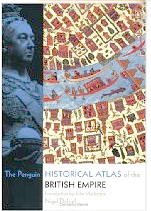 |
The Penguin Historical Atlas of the British Empire
(Penguin Reference)
Nigel Dalziel
Beautifully illustrated and affording overviews of Romans, the Celts, the Anglo Saxons and various other peoples arriving or departing from Britain while roaming the. Topics cover "animal, mineral, and vegetable, plus economical, sociological, and anthropological overviews. A view of how the inhabitats of the British Isles, a thinly populated group on the edge of the world ended up controlling over half the world is here. The Dominions and Australia are covered also. |
  A General History Of All Voyages and Travels Throughout the Old And New World A General History Of All Voyages and Travels Throughout the Old And New World
From the First Ages to this Present Time, Illustrating Both the Ancient and Modern Geography, Containing An Accurate Description Of Each Country, Its Natural History and Product, the Religion, Customs, Manners, Trades, etc. of the Inhabitants, and Whatsoever Is Curious and Remarkable in Any Kind
Du Perier, Reproduction. |




 Copyright © 1998-2017.